Sep 27, 2025
The AI Services Overhang
The technology to replace millions of service jobs already exists, but the economy hasn’t caught up yet. That gap, the distance between what’s possible and what’s actually implemented, is what I call the “services overhang.” And it’s bigger than most people realize.
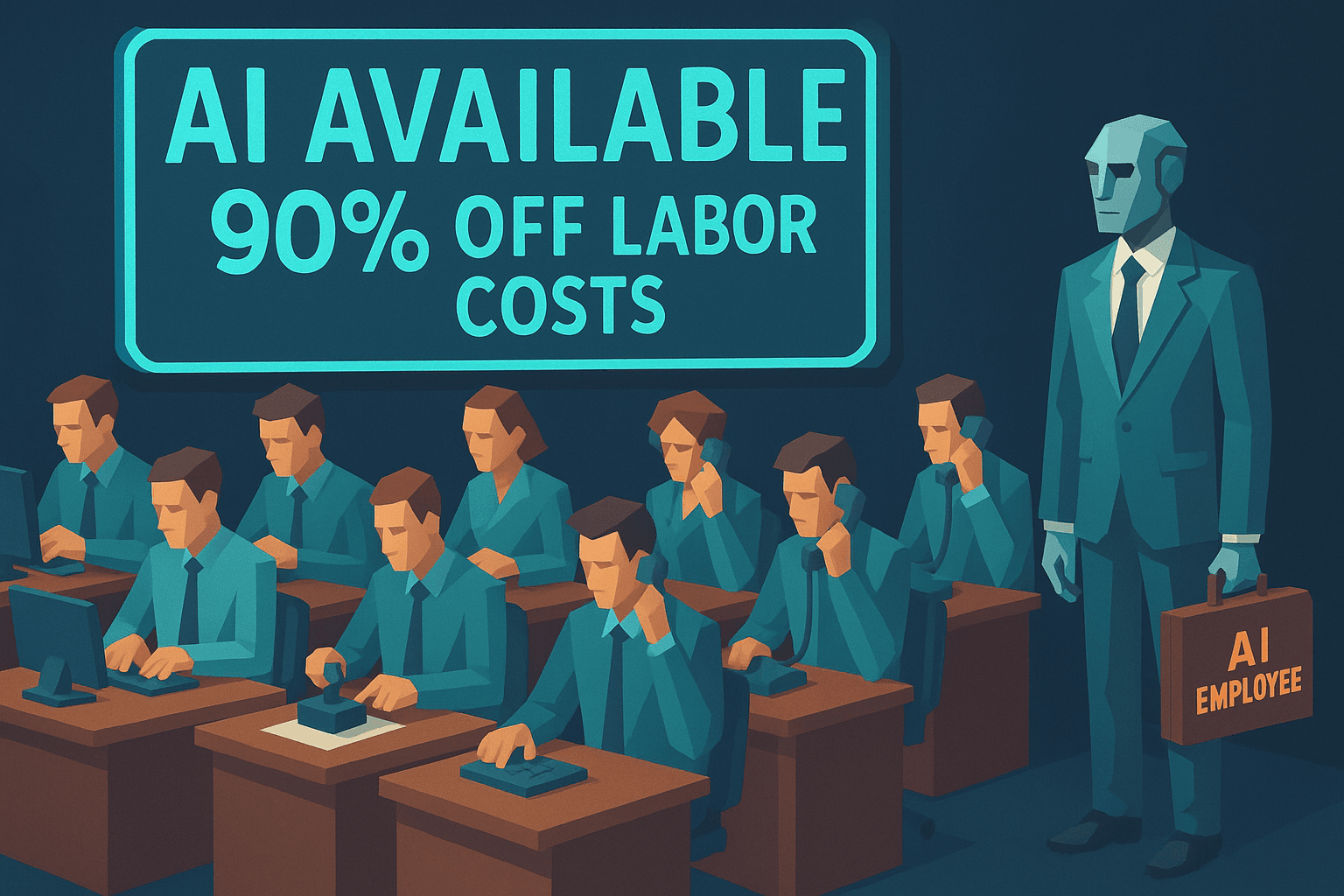
We are living in a strange moment. The technology to replace millions of service jobs already exists, but the economy hasn’t caught up yet. That gap, the distance between what’s possible and what’s actually implemented, is what I call the “services overhang.” And it’s bigger than most people realize.
Think about the kinds of jobs AI can already do: triaging help desk tickets, scheduling appointments, rebooking travel, processing insurance claims, handling HR onboarding, transcribing medical notes or legal dictation. These are not moonshot tasks. They’re routine, repetitive, and text-based. Models today can do them at near-human quality. And yet, millions of people are still employed to do this work by hand.
That’s the overhang. Businesses are sitting on the chance to save enormous amounts of money, right now, just by adopting tools that are already possible. For technical people, this is the opportunity: build and sell those tools.
The reason the overhang exists isn’t that the tech isn’t ready. It’s because implementation takes time. Organizations are slow. They need trust, adoption, and integration. But as soon as you show a company that an AI agent can save them money in the short term, not just someday, but this quarter, they’ll pay for it.
Which industries will close the gap first? Tech companies, probably. They’re faster to adopt. Even so, I’d guess it takes at least a decade for the overhang to shrink in tech. In slower-moving industries, insurance, healthcare, government, the window of opportunity is even larger.
And there’s a bigger shift on the horizon: the rise of the AI employee. At first, it might cost $1,000 per month to have an AI agent handling accounting, data entry, or customer service. Within a year or two, that number could fall to $100. When that happens, every company will have “AI staff.” Whether they’re managed by individual workers or by executives, AI employees will be everywhere.
What happens next is hard to call. Maybe there are mass layoffs. Maybe there’s an explosion of new businesses. Probably both. But the one thing that’s clear is this: we’re in the early days of a massive handoff. Human labor is being replaced by software, and the gap between what’s possible and what’s deployed is the single biggest opportunity in front of us.